
Rooted in Progress
MISSION IN ACTION
The iF Foundation continues to deepen our work in the rural farming communities of Milot, Plaine du Nord, and Acul du Nord. Through our Farm Credit Model, on-site laboratory, and hands-on agricultural training, we're helping farmers move beyond subsistence and build long-term, sustainable livelihoods — for their families and for the generations that follow.
Access and view our 2025 Annual Report

Agricultural Programs
FARM CREDIT MODEL
Haitian farmers are among the lowest-yield producers in the Western Hemisphere — not for lack of drive, but for lack of access to good seed, fertilizer, mechanization, and technical support. The iF Foundation's Farm Credit Model breaks that cycle, giving farming families interest-free credit and hands-on guidance to build lasting, self-sufficient livelihoods. It's a solution, not a handout.
Current program components include:
-
Credit for Farming Inputs
interest-free credit for seed, fertilizer, and land preparation
-
Technical Assistance
hands-on support from planting through harvest
-
Higher-Value Crops
introducing crops like peanuts and peppers to increase farm family revenue
-
Market Access
connecting farmers to buyers and fairer prices for what they grow
INTERNAL FARM PROGRAM
Our Internal Farm serves as a working demonstration site and training ground, where we test and refine techniques before extending them to partner farmers.
Current initiatives include:
-
Chicken Laying Facility
houses our chicken laying operation, producing eggs for our school breakfast program
-
Compost Center
produces organic compost through vermiculture and lab testing to improve soil fertility across our programs
-
Greenhouse
expands our capacity to grow and test new crop varieties
-
Orchard
grows fruit trees for both farmer training and long-term production
-
Beekeeping
supports pollination across the farm while producing honey


Our on-site laboratory plays a critical role in the success of our agricultural programs, combining soil science and food safety testing to help farmers grow healthier crops and access better markets.
Aflatoxin testing is one of our most valuable services, offered to every farmer in our program for each harvest. Aflatoxin is a toxin produced by mold that can contaminate corn and peanut crops, posing serious health risks if consumed and often barring contaminated crops from being sold to institutional buyers. By testing every harvest, we help farmers meet food safety standards, protect their communities, and access better markets and prices for their crops.
We also conduct soil testing, covering both soil chemistry and soil microbiology. Our chemistry tests measure macronutrients (nitrogen, phosphorus, potassium, magnesium, and calcium), pH, conductivity, and organic matter, while microbiology testing characterizes the microbial population in the soil. Together, these tests help us identify soil health issues and recommend solutions that improve fertility for local farmers.
Our laboratory has also served as a hands-on training ground, hosting interns who gained real-world experience in soil science and food safety testing.
Laboratory Operations


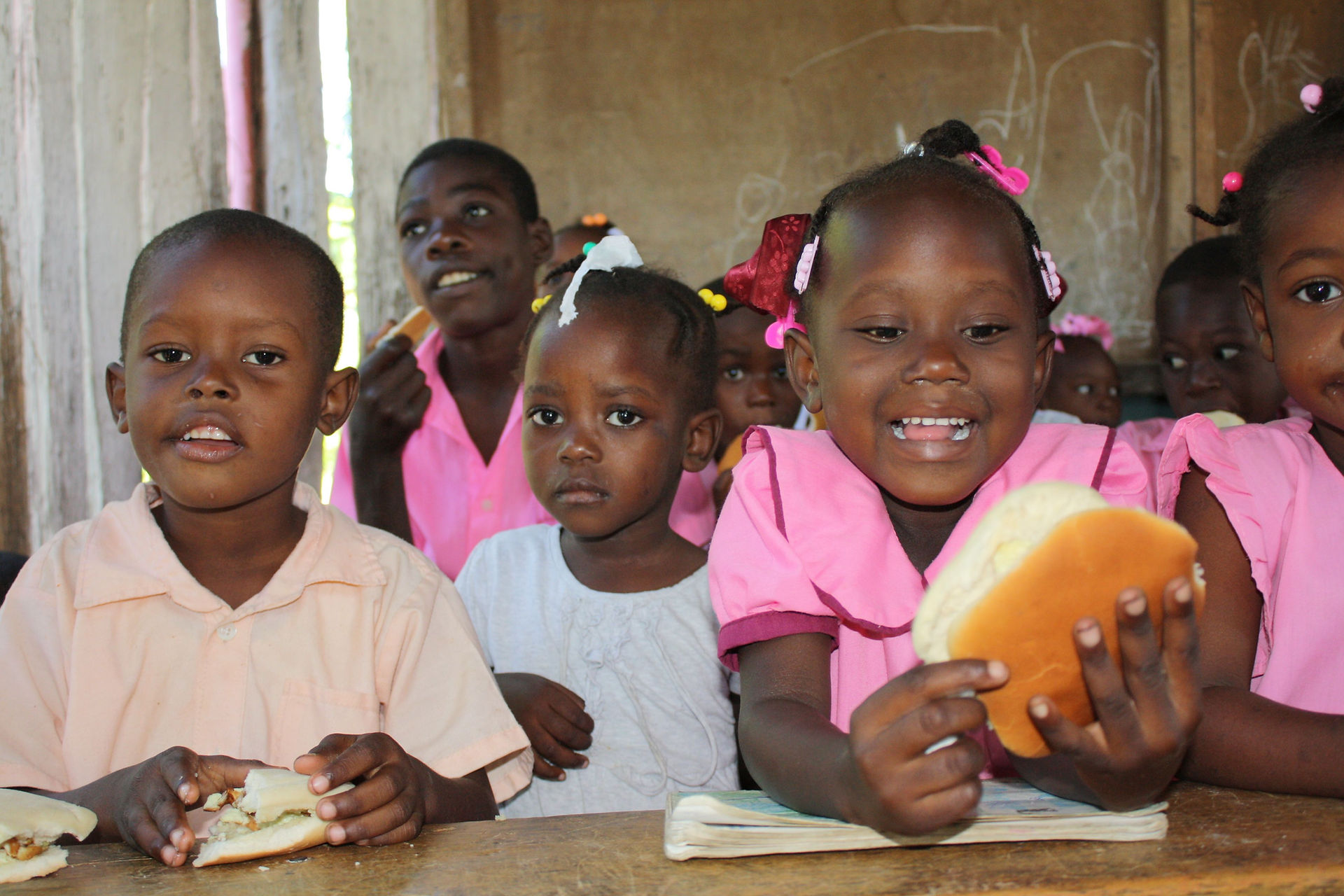
The Haitian Pride Breakfast Program
The Haitian Pride Breakfast Program is a philanthropic outreach program of the iF Foundation, serving breakfast to children at 18 primary schools in Haiti's North Department where we have community partnerships. Operating five days a week during the school year, the Program provides approximately 250,000 sandwiches annually to children who would otherwise start their day without a nutritious meal. Our sandwiches are made with peanut butter from farmers in our agricultural program and eggs from our own farm. Hunger remains one of Haiti's most urgent crises — more than half the population, nearly 5.8 million people, face acute food insecurity, and many families simply cannot afford enough food to feed their children before school. The Breakfast Program ensures these children start their day with a nutritious meal, while the iF Foundation's primary focus remains sustainable economic development.


TESTIMONIAL
“The IF Foundation has been an amazing partner for our feed mill as they have established relationships with many local farmers. We have been nothing but pleased with our interactions with their staff and services that they have provided“ xMOREx
Nick, CEO/Founder
New Roots — Haiti